



Table of Contents:
The Hidden and Unknown Aspects of Birth Control Pills:
Mood, Libido, Hormone Balance, and Long-Term Impacts on Women’s Health
Birth control pills are a revolution in women’s health. They provide women with the freedom to manage their fertility, expand educational and career opportunities, and enable a more predictable personal and social life. Even today, they remain one of the most effective and reliable methods of contraception.
However, the effects of this powerful tool extend far beyond simply stopping ovulation. The biological, emotional, and metabolic changes created by synthetic estrogen and progestins often go unnoticed.
The HerTime approach does not aim to hide these effects, but to understand them — and, when necessary, manage them with personalized solutions.
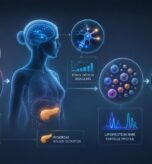
The Brain’s “Natural Calming” Hormone Decreases: Allopregnanolone
In a natural cycle, progesterone rises after ovulation and is converted in the brain into a neurosteroid called allopregnanolone, which promotes calmness, emotional balance, and stress regulation.
Because birth control pills suppress ovulation, levels of this molecule decrease.
For some women, this may lead to:
- reduced stress tolerance
- emotional blunting
- irritability
This effect does not occur in every woman, but it is well-defined biologically.
During the HerTime HerSense (10–25) phase, this is particularly relevant, as neuroplasticity is high, emotional balance is more fragile, and the hormonal system is still in a developmental learning stage.
Changes in Testosterone Levels: Clearer Skin, Lower Libido
Birth control pills reduce testosterone production and availability in the body:
- Ovarian testosterone production decreases
- SHBG increases, reducing free testosterone
- Adrenal androgen output may also be suppressed
As a result:
- Skin becomes calmer with less oiliness and acne
- However, some women may experience decreased libido, vaginal dryness, or reduced sexual desire
These effects tend to be more pronounced during the HerFlow (24–40) phase, when libido, energy, muscle function, and metabolic health rely more critically on testosterone physiology.
Effects Vary by Type of Progestin
Not all birth control pills are the same. Some progestins:
- have anti-androgenic effects and reduce acne or hirsutism
- while others have mild androgenic activity, potentially causing the opposite
Therefore, pill selection must be entirely personalized.
The HerTime clinical approach evaluates hormone profiles, skin type, mood patterns, metabolic risks, and genetic predispositions together to guide safe and effective choices.
A Lesser-Known Detail: Subtle Evolutionary Shifts in Partner Preference
Research shows that cycle suppression can lead to very small shifts in mate preferences.
During the natural cycle, women may prefer more “masculine” traits when estrogen is high; pill use can shift this preference toward softer, more estrogenic profiles.
This is not a dramatic change, but biologically intriguing and noteworthy.
The Less-Discussed Biological Effects of Birth Control Pills
HerTime does not hide side effects; it informs, empowers, and offers alternatives when needed.
The following effects do not occur in all women but are documented in scientific literature:
1.Micronutrient Deficiencies with Long-Term Use
In some women, birth control pills may reduce levels of:
- Magnesium
- Vitamin B6
- Vitamin B12
- Folate
- Zinc
These deficiencies can contribute to fatigue, mood fluctuations, and poorer sleep quality.
This is especially important in the HerSense and HerFlow phases, when cellular development, stress adaptation, and hormone metabolism are more active.
2.Effects on Gut Health and Autoimmunity
Recent studies suggest that oral contraceptives may:
- slightly increase the risk of IBD conditions such as Crohn’s disease
- alter the microbiome and gut permeability
- increase autoimmune susceptibility in predisposed individuals
These risks are not high, but should be evaluated in women with a family history of autoimmune disease.
3.hs-CRP and Inflammatory Tone
In some women, birth control pills can:
- increase hs-CRP levels
This rise is usually mild, but noteworthy in women with insulin resistance, PCOS, or metabolic risk factors.
Inflammation management becomes especially important during the HerFlow phase for long-term metabolic and hormonal health.
4.Pills Relieve Symptoms, but Do Not Treat Root Causes
Birth control pills can quickly improve:
- PCOS symptoms
- painful periods
- irregular cycles
- acne
However, they do not address underlying root causes such as:
- Insulin resistance driving PCOS
- endometriosis
- Gut-derived acne
- metabolic inflammation
They suppress symptoms rather than resolve the biological origin.
The HerTime approach acknowledges the relief that pills provide, but also investigates deeper biological causes to build a more comprehensive long-term health strategy.
Conclusion: The Right Pill + The Right Woman = Real Power
Birth control pills are a transformative tool in women’s lives.
But when tailored to each woman’s unique biology, they become:
- Safer
- more balanced
- and significantly more empowering
During HerSense, pill selection requires more nuance due to heightened brain development and emotional sensitivity.
During HerFlow, priorities shift toward libido, metabolism, cognitive performance, and energy regulation.
HerTime evaluates each woman’s biology, cycle dynamics, goals, and long-term health risks — at any age.
When science, personalization, and a life-stage perspective converge, birth control pills are not a limitation, but a source of strength.